




2012
Higgs Boson Discovered
Global event
In July 2012, scientists at CERN’s Large Hadron Collider (LHC) made a major breakthrough by discovering a new particle that matched the long-theorised Higgs boson. This particle helps explain how everything in the universe gets its mass. According to Peter Higgs’ theory, published 50 years earlier, an invisible energy field called the Higgs field fills space. As particles move through it, they gain mass. The Higgs boson is the proof that this field exists. The discovery was made using the LHC, the world’s most powerful particle accelerator. Two experiments, ATLAS and CMS, found the particle independently, giving scientists high confidence in the result. This confirmed a missing piece of the Standard Model, the framework that describes how particles and forces interact.
Societal, political, and scientific relevance
The discovery was a landmark moment in science, confirming how particles acquire mass and validating decades of theoretical physics. It inspired global public interest, demonstrating the power of international collaboration and the value of research.


Impact on research and education
The discovery of the Higgs boson has become a powerful tool for exploring new physics. Different theories, like supersymmetry, predict multiple types of Higgs bosons and suggest the Higgs may play a role in producing phenomena such as dark matter. By studying how the Higgs interacts with other particles, researchers hope to uncover signs of physics beyond the Standard Model, which will only be possible through continued experiments and precise measurements at the LHC.
Role of Springer Nature books
Springer Nature eBooks cover essential topics that define scientific breakthroughs. These titles provide an overview of the field of Higgs boson physics, such as the first in-depth review of the complete results of the discovery. Moreover, they delve into the theoretical foundations, experimental techniques, and ongoing research that continue to shape our understanding of particle physics.
Serving as vital resources for both students and experts, they give readers an understanding of the Higgs boson’s evolving role in exploring phenomena like supersymmetry and dark matter, guiding the next generation of discoveries beyond the Standard Model.
Book highlights

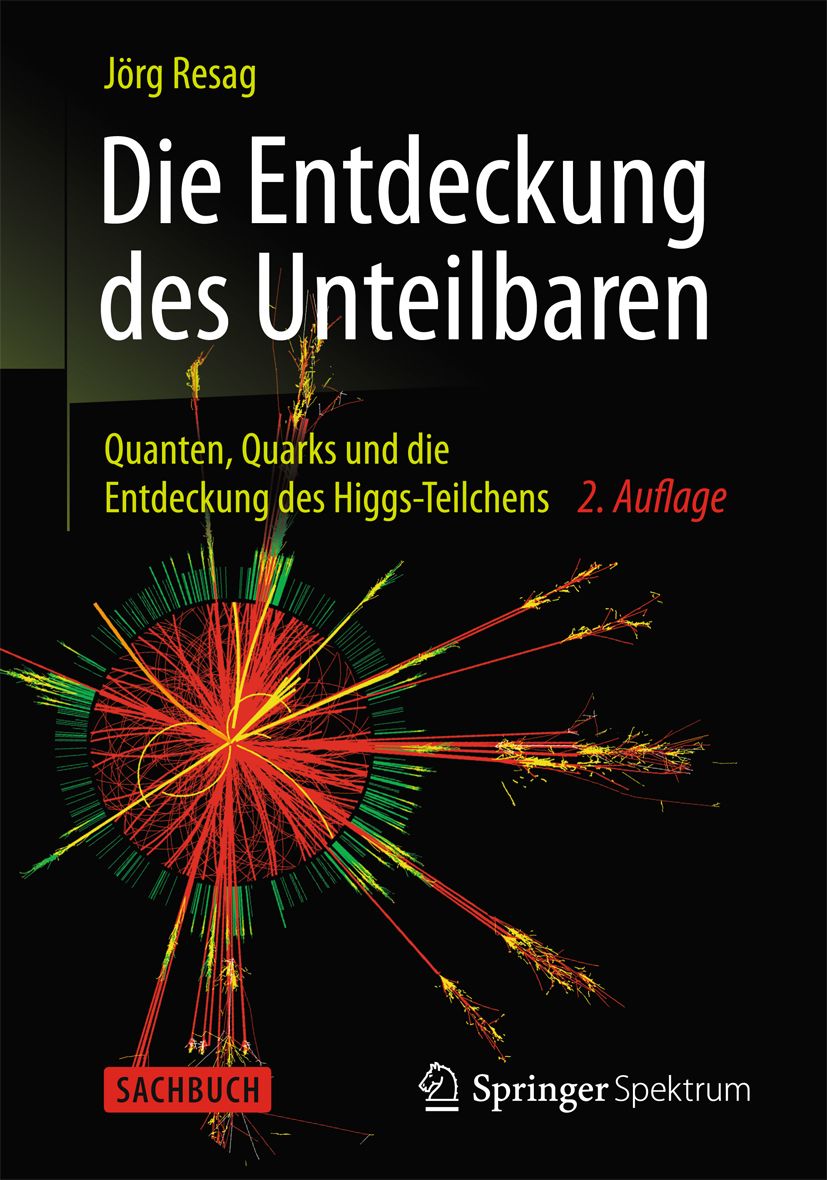
This book explains
how the Large Hadron Collider opens a new frontier in particle physics, exploring questions about mass, hidden dimensions, dark matter, and the Higgs boson. It introduces atoms, quarks, quantum mechanics, and Einstein’s space-time, culminating in discoveries like the Higgs in 2012. Updated for its second edition, it reveals humanity’s progress toward unlocking the universe’s deepest secrets.

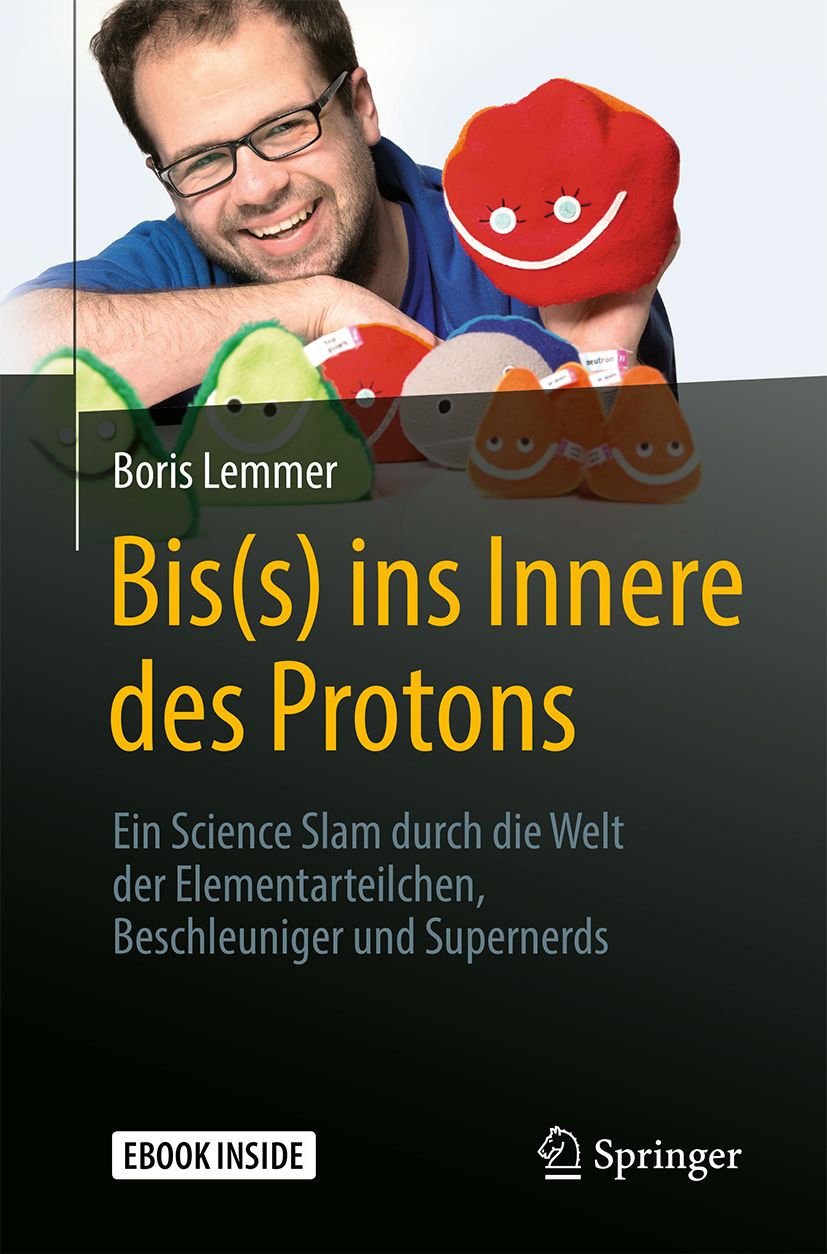
This book explains
how the Large Hadron Collider opens a new frontier in particle physics, exploring questions about mass, hidden dimensions, dark matter, and the Higgs boson. It introduces atoms, quarks, quantum mechanics, and Einstein’s space-time, culminating in discoveries like the Higgs in 2012. Updated for its second edition, it reveals humanity’s progress toward unlocking the universe’s deepest secrets.

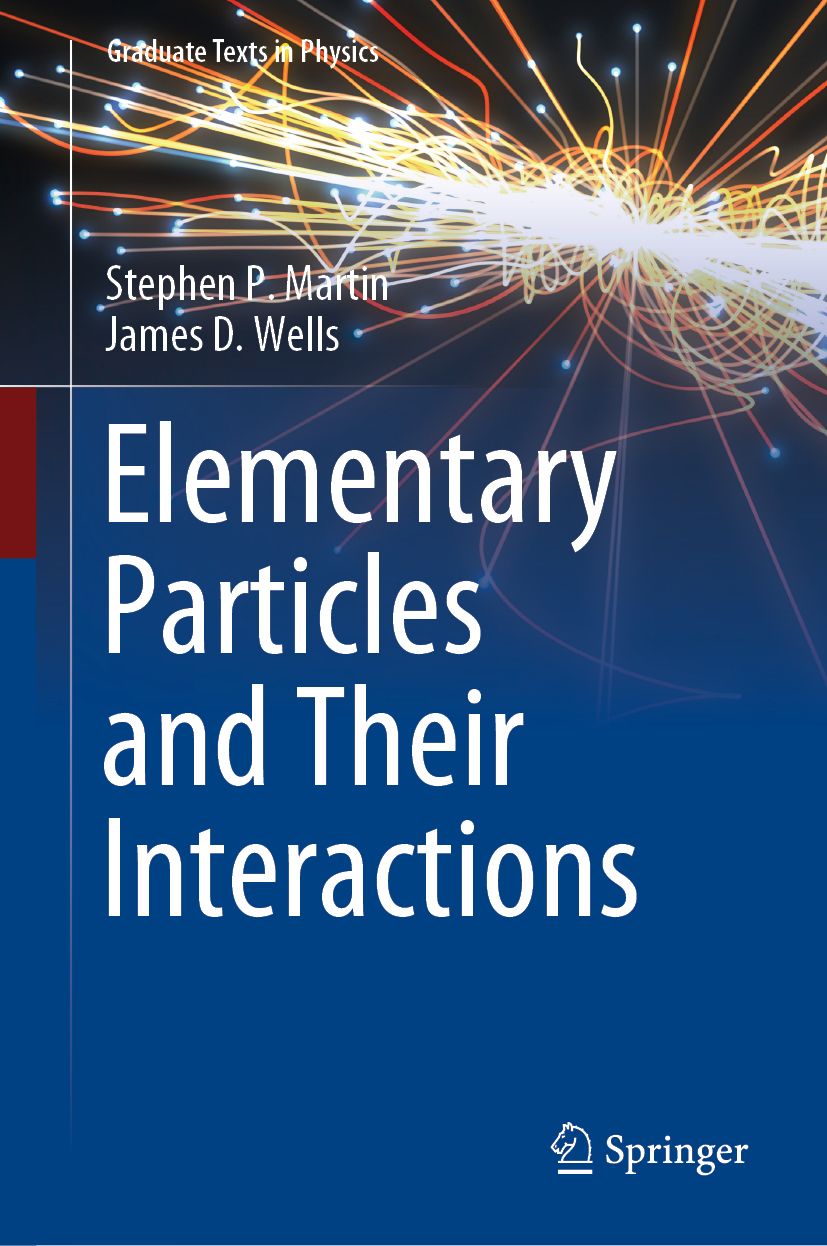
This book explains
how the Large Hadron Collider opens a new frontier in particle physics, exploring questions about mass, hidden dimensions, dark matter, and the Higgs boson. It introduces atoms, quarks, quantum mechanics, and Einstein’s space-time, culminating in discoveries like the Higgs in 2012. Updated for its second edition, it reveals humanity’s progress toward unlocking the universe’s deepest secrets.


 Built with Shorthand